Showing posts with label history. Show all posts

Friday, January 21, 2011

Political Reform Revisited

The dynamics leading up to repeal of the new Healthcare Reform bill have been interesting to observe. Being one who is fascinated by the lessons we can learn from history, it wasn't difficult to see many parallels between Reconstruction Congress and the destructiveness of the current and last one.

In case something was being misinterpreted and twisted from reality, I decided to review some of my Black History materials and compare them with what can be found on the web in regard to the U.S. Congress from the 1860s, also known as the Reconstruction Congress.

The focus is on the newly-installed Black members of this august body. My recollection is that while all 31 Representatives and two Senators were very well educated and capable men, they faced inordinate obstacles to doing their actual work because their challenges were sometimes not so subtle maneuverings to unseat them due to their race. Not to trust memory to this very important issue, I went to Google which pointed me to Wikipedia. My recollection was correct.

There was only one member of the Congress who was also a non-slave electee who seems to have avoided the vitriol. Otherwise, all suffered some type of distraction from their stated duties that essentially tore them away from their jobs, led to Jim Crow, and made them less effective than we (as the country of electors) would have wanted. How similar this state of affairs seems to be to our current Congress and the last session as bi-partisan politics fueled getting Black representatives' having aspersions cast their way to discredit their character and therefore diminish legislation and representation that they backed.

The saying is, "History repeats itself." Perhaps that is why the Healthcare Reform Bill is being dismantled by both parts of the Congress and I struggle to preserve these thoughts. Does this act of destruction (under the guise of insufficiency) portend the removal of Obama and the restoration of a Reganesque/Bush-like administration? And does this mean it will take yet another 100 years to gain any meaningful inroads for those who are American, whether naturalized or natural, to receive any of the fruits of the American Promise?

Wednesday, July 7, 2010

Classic Love Song

A lot of songs have been going through my head for the past week or more. Some of it is classical music but on it's face it wouldn't be classified as classical. Nevertheless, tonight I'm collecting them and storing them on my profile page so that they can live in a place where they can be remembered as classics and contrasted against other things that can be considered classic. They're also shared in this post as hyperlinks to YouTube. Right click any of the links and select your preference on how to open it so you too can experience the rendition of the recording.

One of the songs is by one of my favorite composers, Stravinsky! (No, but I can't remember his name right now. I'll say it in a minute.) "I Loves You Porgy," is the song. It's one of those classic love songs. The version that keeps going through my head is the very soulful one by Nina Simone. I found that one (actually, two versions by Nina) but I also found one version of it by "Billie Holiday. I Loves You Porgy

Now Billie is one of those singers who makes it difficult for me to listen to what's being sung. But people rave about her and her singing even now. (Her professional nickname is "Lady Day.") So I endeavor to listen and learn to appreciate whatever it is they're hearing and the concepts she embodies. Given what Bess is singing about, it seemed quite ironic that Billie Holiday should be singing that song.

She and Bess faced the same type of Sportin' Life who lured her down a dark, dangerous, and deadly path. Unfortunately, there aren't many who are able to travel that road without getting singed. Holiday became one of those tragic statistics of both the Road to Fame and the Road to Sportin' Life. It seems to be a classic story. But her quiet, innocent veneer was not a facade. It was more legitimate than anything else about her life.

What I saw as I watched the video was a woman who merely sang the words and notes, bereft of any emotions, bereft of any attachment to the meaning they hold. She was just quietly crooning a tune. That approach, however, was quite effective when I watched her sing the notorious "Strange Fruit." That song's theme is so horrific that most likely the only way to deliver it is with the same quiet innocence she employed. Anything else would be overkill. It has become a classic presentation.

Nina Simone's version haunts you. You hear the anguish, the woman's soul torn in twain for the man she loves compared with the man who brings her the symbolic love from which she wants to be torn.

Nina has two versions. One is from 1962 from 1962 which is an interpretation of not only Bess's song but a progression through several of the songs from the opera before moving into her love song. I didn't think I'd care for it. But as she moved into the close, it became a definite love song to Porgy, her strong vocals reaching out to her man as she promises him what she will do while they're together.

Overall, the version I still like best, the one that runs through my head tonight and is the symbolism of the dilemma that plagues Bess, is the one she sings in the single version (not the collage) of the classic love song to Porgy. I Loves You Porgy by Nina Simone It isn't Sportin' Life of which she sings, but what Sportin' Life has to offer. It's the craving that gets instilled in what he offers that becomes the irresistible magnet in spite of how strong her love for Porgy remains.

George Gershwin wrote the opera "Porgy and Bess," not Igor Stravinsky. They're amazing composers, each in his own right. While both are two of my favorite classical composers, they provide us with strikingly different perspectives of classical music as well as how it affects our thoughts and ideas.

I love diversity everywhere it's found.

Monday, June 7, 2010

Weather and History

We've been slogging through an exceptionally wet spell, here in Idaho, and having noticed my mood has been going distinctly south more and more each day that there's no break in the rain, that got me to musing about the effect weather has on history. That's an exceptionally long introductory sentence, as I look it over, and it seems that the weather is having a draggy effect on my writing as well.

SAD (Seasonal Affective Disorder) is a recognized medical condition characterized by feelings of depression, malaise, and fatigue. It appears that lack of sunlight can cause a host of negative physical symptoms and the treatment is exposure to sunlight. Actually, there's a great deal more involved, but sunlight is key to regaining a sense of metabolical equilibrium.

However, too much sunlight can trigger another set of physical problems, ranging from sunburn to skin cancer. Again, it's finding the proper balance that seems to do the trick.

The Historical Connection

And now for the tie-in to history. What affects one individual also affects collections of individuals and when it's the weather that's the catalyst, people can get downright cranky. In fact, they can get rebellious.

July 4, 1776 - The signing of the Declaration of Independence and the beginning of the American Revolution.

July 14, 1789 - Storming of the Bastille and the beginning of the French Revolution.

These two examples of the long, hot summers of rebellion make me wonder if the heat took its toll on the populace and one more hot day was the proverbial straw.

The Exception that Proves the Rule

Aha! You say. But what about the Russian Revolution that began in February 1917, eh? No problem there. Have you ever been in Russia in the winter? Dark days, no sunlight, and unrelenting cold and snow and ice and sleet. People were getting antsy. They knew what was coming and had to do something to get rid of the angst that was building up inside. No better way toward catharsis than toppling the government.

Anyhow, just a few thoughts on how weather may have been a silent (or not so silent) partner in some major historical events. Anyone have any other events you can link to Mother Nature?

Monday, May 31, 2010

Valorous Service


Benjamin Oliver Davis, Sr.


Who is this man? Why is he important to us in terms of history, especially on this day of observance of those who have died and served their country?

The man is Benjamin Oliver Davis, Sr., a distinguished and loyal United States military man who began his service in the Spanish American War. After serving in both World War I and II, he was tapped as an advisor for the purpose of being a de-segregationist of the U.S. military during World War II in the European arena.

He had a colorful career and was among those referred to as the Buffalo Soldiers (a most notable group of Black military men) and ultimately reached the rank of Brigadier General.

During Black History Month and a few weeks thereafter, it was interesting to not only read but also see dramatic representations of the attitudes toward soldiers of color. Their determination to be among those on the front lines in combat while face the very real danger of being killed in the line of fire was palpable in every line of dialogue among the male characters. In each instance, be they Japanese, Native American, Hispanic, or Black, they were denied the privilege of offering their blood, their limbs, their very lives to demonstrate that they were just as loyal and just as American as their White counterparts. Maybe that was a good thing in light of the fact that it meant they were more likely to go home intact to their wives and families. But staying in the shadows didn't show the world, let alone the White comrades, their willingness to stand and be counted as just as accountable, just as brave, just loyal to their country.

These were the ones who because of their cultural backgrounds were able to develop strategies that confused and confounded the enemy while allowing the U.S. forces to gain the upper hand. They wanted the opportunity to be used to their highest and best in service to their country and to freedom rather than relegated to the status of background players and mere servants. They fought a double battle not only on foreign soils but also an enduring one at home -- to be recognized and allowed. What an irony that their combat was not only for life and freedom of those being persecuted by the enemy but also for the freedom to be, live, and fairly compete for their day in the sun against, of all people, their fellow countrymen of another color.

But let us return to the original question. Who is this man, this Benjamin Oliver Davis, Sr.? He is the man who served his country through three wars and over more than 50 years. He is the man who was pivotal in beginning the disintegration of the walls of racial barriers in the U.S. military, making it possible for each man to hold his chest high in presentment of the salute because he was standing in valorous service and full representation of his country. And he is even more.

Viva
Yvonne LaRose, CAC

Wednesday, April 21, 2010

Hygiene: A Historical Dilemma

Ok – that’s not a particularly sexy title. I admit it. But it is a valid point when one writes gay historical fiction. Writing bed-scenes when your writhing couple didn’t own a bath or shower and wouldn't do for several hundred years might be a turn-off for your reader.

These days we are all Germ Free Adolescents, washing our hair every day and brushing our teeth whilst wearing scented panty liners but history, in general, is not famous for its hygiene. We all know the stories of people carrying posies around so they couldn’t smell the world around them, or scattering rue and rosemary on the rushes to keep down the fleas. I believe the rumour is that Elizabeth I took a bath twice a year, whether she needed it or not.

Once the Romans left England, plumbing became a lost art, and wasn’t really rediscovered for about two thousand years. In the interim times, well, let’s say that the natives were sometimes a little revolting.

There weren’t a lot of cosmetic dentists around in earlier times, and although the toothbrush had been invented in the 15th century, it didn’t really catch on that well (just as well we STILL don’t have to brush using badger or pig’s bristles…), and flossing? Forget it, that’s not caught on in England even today... (joke… joke…).

The Romans definitely had it right, and it's probably because of this that this is one of the most popular gay historical eras - it's very easy to get your men naked ("Fancy a trip to the Baths, Lividius?" "Don’t mind if I do, Maximus, old Beanus.") and nice and clean and ready for action.

The Greeks too, were sticklers for cleanliness, and not only that, they were accepting of male love, so no problems there.

It’s when you push ahead a few centuries that you begin to have problems, particularly in more northerly locations where people are covering themselves in skins and bear fat and not peeling off until Spring. Cowboys - out on the range for months on end in a dust bowl, Shakespearian Luvvies sharing their beds with lice and bed-bugs, naval commanders rogering the cabin boy who hasn't seen warm water or fresh fruit for an Atlantic crossing.

So how do get your hero’s todger out of his breeches and into the willing hand of his boyfriend without worrying whether their bed holds more life than just the humans? Ha ha! It’s possible, and with a little bit of suspension of belief without being totally anachronistic, too.

Say for example, you have a couple of lusty young shepherds who have been working on the farm all day in an 18th century small-holding and they look at each other over the sheep dip and they are sweating, the curls sticking to their foreheads, both covered in sheep-muck – and….Hmmm. Problem.

So – here are your basic guidelines for smexxing it up in days gone by:

1. Remember your characters come from a time when hygiene wasn’t a great issue.

They were used to smells; they aren’t going to be put off when it comes down to it. Concentrate on manly sweat, and accurate scents that might be there, rosemary, juniper and cinnamon. Celery and cardamom (often chewed to freshen the breath)

2. Ignore teeth.

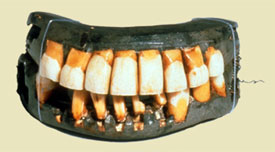
It’s better not to keep referring to everyone’s perfect teeth because that’s going to be pretty damned unlikely before modern times and National Health dentistry. Assume that your hero and heroine are savvy enough to eat well and haven’t been stuck on long ship voyages. Snogging someone with bleeding gums or a jaw full of wooden dentures ain’t never going to be sexy.

3. Make them a little unusual for their time;

Remember Horatio Hornblower? . He used to shower daily on deck to the general amusement of all (which included his fellow lieutenants who were probably a little more fragrant than he was.) Horatio’s skin would have tasted deliciously of salt, and not of rancid sweat. What a damned shame that Lieutenant Bush never took advantage of this, canonically. I’m pleased to say, though, that there are now a few Age of Sail novels (Lee Rowan’s Ransom, Alex Beecroft’s Captain’s Surrender) that are exploring the love of 17th Century sailors - for other sailors.

4. Have a sex scene after swimming,

that’s always an ideal time to avoid problems like fleas….

5. Bedbaths!

An Erastes staple! I have had a bed-bath in both my novels so far. Not only are they a great way to get rid of any revolting smells, smeg and other things wot shouldn’t be on skin when a tongue is going to be stuck in any orifice handy, but they are sexy as hell and get the juices flowing, and the blood surging to places where it should be surging. Natural sponges=sexy.

6. Don’t forget the times when hygiene WAS important.

Even in Britain, before the Romans buggered off and us English reverted to smelly painted savages, there was underfloor heating, hot water, communal baths, massages, showers and hot and cold running slaves. Egypt, China, Japan too - all had higher civilisation than northern Europe.

7. And yes! There were showers in Regency England!

Here’s proof. Of course it meant that one’s man had to stand on a step-ladder and pour water into the top – but perhaps one’s man enjoyed this task – and he’d certainly enjoy drying sir off afterwards. But not with a soft thick towel please!!! Not until after the Great Exhibition!

Have good clean fun!

Erastes writes gay historical fiction. Her novels range from the English Civil War to Victorian times. Find out more about her books and short stories at her website www.erastes.com. She is also the owner of SPEAK ITS NAME the only place on the planet dedicated to gay historical news, reviews and interviews.
Monday, April 12, 2010

A Slice of History from Viva

Isn't this a great group of bloggers? Aren't you intrigued about what you'll be able to read from them?

I've been a member of the Historical Novelists list since 2002 (or so). They feed my love of history, research, and just good conversation. Being associated with them has enhanced my appreciation of history and how it shapes our present lives. Engaging in the conversations has illuminated some previously unknown facts and situations.

My writings run the gamut. My writing life began with providing publicity for the South Pasadena Chamber of Commerce as well as the Business & Professional Women's Club. Those were in addition to writing legal documents and related matters as a transactional and litigation paralegal (oh yes, and as the South Coast Air Quality Hearing Board Legal Clerk). Those endeavors were soon supplemented with my becoming a freelance journalist/reporter and law clerk.

After a while, my writings took on more form as I began hosting and producing my own radio newscast on legal news for the visually impaired community in the Bay Area. My research areas also grew as I did freelance research on women's health issues for KRON.

While my poetry titles continued to grow from high school, I began to keep my manuscripts and perform them in the early 1970s. That was when my childhood neighbor's godfather revealed that he was a poet and songwriter -- Prince Patridge. He became my mentor. My poetry has also been performed by Mona Golabek on her program "The Romantic Hours" and a few pieces have been published on the Web. I long to have time to put together a collection as a manuscript for a chapbook or for a full book.

My fictional and inspirational writing began in the late 1990s and continues. Again, I have a very strong desire to aggregate many of those pieces for a book.

My life turned away from law and went in the direction of employment and recruiting, then management. Within the first two years of going independent (and a year after earning my California Accredited Consultant designation) I found myself being invited to submit proposals to be a recruiting and HR conference speaker based on my writings in those areas, and to contribute to an India university journal on management.

Desire became reality when I was published as a contributor to one of the CollegeRecruiter.com anthologies on getting a job.

My employment industry endeavors have been refined as the years have passed. My focus areas are in regard to diversity; women as leaders; hiring, retention, and promotion of personnel, especially minority women; ethics; and abuse.

Those areas are where my contributions to Clio's Children will be. The inspiration for focusing on this niche area sprang from being invited to be a speaker-presenter for Black History Month this year and then delivering the sermon in honor of Black History Month.

Being multi-racial, it was easy for me to see the value in sharing some of my research about significant contributions minorities have made to our lives and highlighting their accomplishments in spite of the many obstacles that my specialty populations have made.
 

Back to TOP

Glamour Bomb Templates