cross-posted from www.stephaniedray.com
Though no ancient sources directly link the two monarchs, it’s difficult to write a novel about the life of Cleopatra’s daughter without referencing one of her mother’s bitterest enemies.
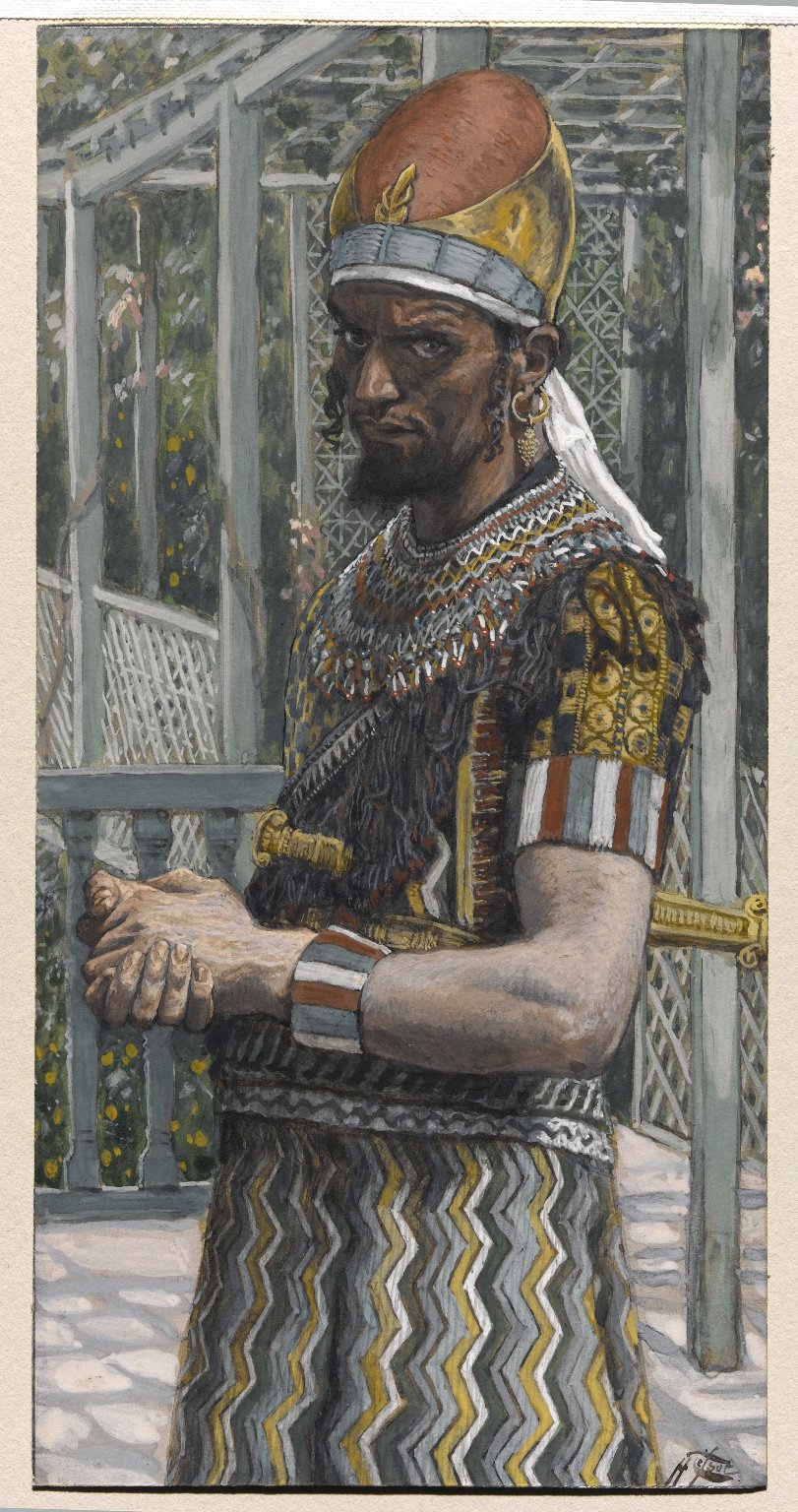
Herod the Great was Cleopatra VII’s rival even before her affair with the Roman Triumvir, Antony. As a Ptolemy, Cleopatra maintained a hereditary claim on Judea, but that wasn’t the only source of her conflict with King Herod.
To say that Herod’s personal life was a study in dysfunction is to put it lightly. When he entered on a campaign to rid himself of his wife’s relatives, of the Hasmonean Dynasty that preceded him, his mother-in-law found a sympathetic ally in Cleopatra VII. The Queen of Egypt tried to intercede on behalf of her friend, and apparently won Herod’s lifelong enmity as a result.
The feeling appears to have been mutual. Cleopatra would later demand from Antony that Herod’s whole kingdom be surrendered to her, but because Herod had been a loyal friend to Antony, he only stripped Herod of date and balsam plantations in Jericho and Ein Gedi.
The rivalry reached such a fever pitch that Herod is said to have considered assassinating Cleopatra, but was dissuaded by his advisors, who assured him that Antony would never forgive him. After Antony and Cleopatra’s defeat, King Herod went over to Octavian, asserting that he had given Antony the best possible advice: Kill Cleopatra.
Did the rivalry end there, or did Herod continue to fear the Ptolemies even after the famous queen took her own life?
Three of Cleopatra’s children survived the civil war: little Ptolemy Philadelphus, Cleopatra Selene, and her twin brother, Alexander Helios. As Ptolemies, all three could exert a claim over Judea, and because they were half-Roman, it might well have been feared that their claims might be supported against Herod if the political fortunes of Octavian should change. Even dead, Cleopatra and Antony still had their partisans, in Rome and elsewhere. Alexandrian cults like those surrounding the goddess Isis still held enormous political sway. If we credit the gospel of Matthew, then we also know that Herod was particularly threatened by children born under auspices and omens, which would have led him to be doubly wary of Cleopatra’s twins.
Given the portrait of Herod that has come down to us through the ages–namely that he was so power hungry and paranoid that he had his own sons put to death as rivals–it is difficult to believe that he ever viewed Cleopatra’s daughter with dispassion. Cleopatra Selene not only survived childhood, but went on to become Queen of Mauretania. Are we to believe that King Herod was not made uneasy to see his enemy’s daughter given more territory to rule than all the other client kingdoms in the empire put together?
Cleopatra Selene and her husband Juba appear to have had the implicit trust of Augustus, and did not need to make frequent visits back to the capitol to secure his good will, but Herod was less secure. Whereas Selene and Juba founded a port city and named it after Caesar, Herod commenced building two such cities, naming them both after Augustus. Whereas Cleopatra Selene and Juba appear to have worked in easy concert with their proconsular neighbors in Africa Novo, Herod was obliged to get permission for his military exploits, and overstepped on at least one occasion, prompting an angry letter from Augustus. Given these tensions, it is hard to imagine that Herod and Selene did not wish one another ill.
However, whether or not an active rivalry between Herod and Cleopatra Selene existed, the King of Judea was a pivotal contemporary figure in her life by which she must have measured most of her accomplishments as a client queen. That Herod comes down to us through history more well-known than Cleopatra Selene is partially a function of her gender, but also because her reign was one of relative peace and prosperity, lacking the big splashy family drama that marked Herod’s rule.


 Posts
Posts


